
Why we are going MCP-first
At Vasilkoff, we are trying to use MCP everywhere we can.
Not because it sounds trendy, but because most delivery problems are not caused by code quality alone. They happen when planning, implementation, and documentation drift apart. The board says one thing, the repository says another, and the docs are stale.
MCP helps us remove that drift by connecting systems directly into the workflow where decisions are made.
The problem we wanted to fix
In a classic agency setup, project management can become disconnected from real delivery:
- Trello card statuses lag behind what is already done in code.
- Technical notes stay buried in commits or chats.
- Documentation updates get postponed until "later" and often never happen.
- Team members waste time asking for status instead of shipping work.
That gap creates friction for both engineers and clients.
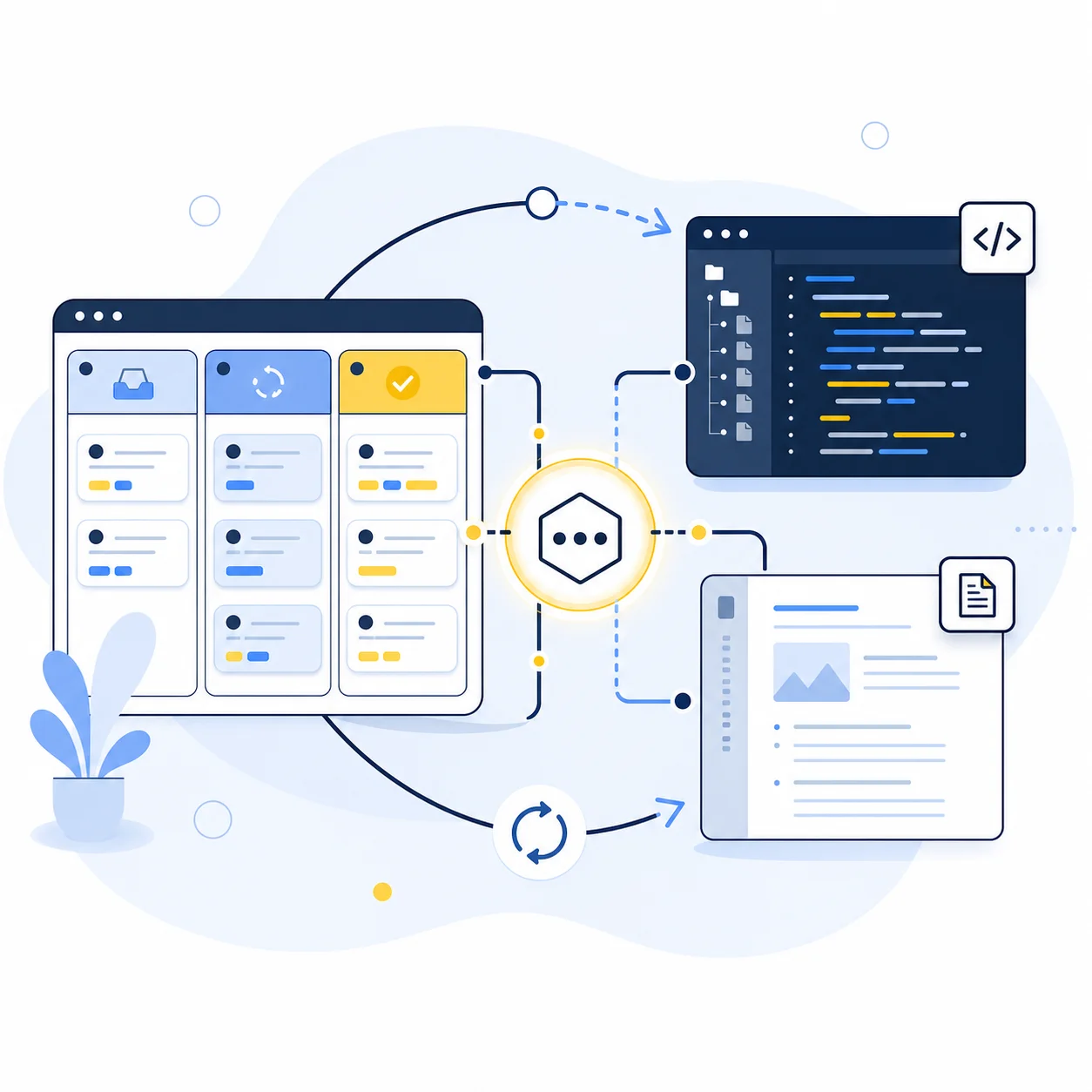
How we structure projects
Every project gets:
- A repository with source code.
- Documentation in the same repo for architecture, decisions, and operating notes.
- A Trello board for priorities, phases, and stakeholder visibility.
The key rule is simple: these three layers must stay in sync.
Trello MCP in our daily workflow
We use Trello MCP to keep project state aligned with delivery state.
In practice, this means:
- Card movement and task metadata in Trello can be updated as part of the same operational flow as engineering work.
- Delivery context can be reflected where the team actually plans and tracks execution.
- Project updates are less dependent on manual copy-paste between tools.
Trello remains the operational surface for planning and communication, while the repo remains the source of truth for implementation. MCP is the bridge.
What this gives us in real projects
1. Better status clarity
Stakeholders can trust that board progress reflects delivery progress more closely, instead of relying on occasional manual status cleanups.
2. Lower coordination overhead
Less time is spent on repetitive "did this move to done?" administration. More time goes into product decisions and implementation.
3. Stronger documentation discipline
Because repositories and project tracking are treated as one delivery system, documentation updates become part of execution, not a separate afterthought.
4. Faster onboarding and handover
When board state, code state, and docs are aligned, a new engineer or stakeholder can understand project reality quickly.
Our broader MCP principle
Trello MCP is one concrete example of a broader operating model:
- If a tool is central to delivery, we try to integrate it through MCP.
- If a process is repetitive and error-prone, we try to reduce manual handoffs.
- If project truth is split across systems, we try to connect those systems at the workflow level.
This is the same reason we also automate communication and support workflows in other projects, including bot and automation stacks where it makes sense.
Practical takeaway for teams
You do not need to "MCP everything" on day one.
Start where drift hurts you most:
- Pick the project management tool your team already uses.
- Connect it to the system where real work is done (usually the repository).
- Define a small set of synchronization rules that remove manual status work.
- Expand gradually once the first workflow proves stable.
The goal is not more automation for its own sake. The goal is less operational noise and more reliable delivery.
Final thought
At Vasilkoff, MCP is becoming our default mindset: connect tools, reduce manual friction, and keep planning synchronized with execution.
Trello MCP is one of the most practical wins in that direction for us, because it keeps project visibility and engineering reality moving together.
If you want this pattern implemented for your own team, reach out through our contact page.