Android
Native Kotlin app, Jetpack Compose UI, Xray-core, credits, ads, RevenueCat/App Store style billing parity.

Vasilkoff Ltd offers a production-proven white-label VPN platform built from the same codebase as Voice VPN: Android, iOS, macOS, Windows, Linux, backend, server provisioning, monetization, and deployment.
This is not a prototype. Voice VPN has been live for over 12 months with users in markets including India and the UAE.
The platform runs on VLESS + REALITY with Xray, a modern protocol stack designed to blend into normal HTTPS traffic and stay useful in restrictive networks.
Investment goes into your branding, platform extensions, backend setup, nodes, store submission, and handover - not basic R&D.
Request white-label quote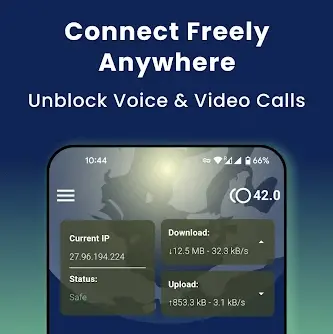
Voice VPN already exists as a working product; white-label work starts from production code.
Xray-based infrastructure built to resist fingerprinting and ordinary VPN blocking.
Android, iOS, macOS, Windows, Linux, backend API, and node provisioning.
Subscriptions, credits, rewarded ads, web checkout, app-store billing, or hybrid access.
Voice VPN is Vasilkoff Ltd's own VPN product and the foundation for our white-label VPN platform. It is a finished system with real users, live infrastructure, mobile and desktop codebases, monetization logic, and deployment automation.
For clients, this means the budget goes into customization and launch work, not discovering whether a VPN product can be built at all.
The white-label offer starts from a working product stack. Customization can be scoped by component: app UI, platform rollout, backend, server regions, billing, ads, compliance, and release support.
Minimal branding changes are fast. Multi-region backend, advanced monetization, enterprise controls, or store-specific compliance are scoped as separate delivery components.
Voice VPN is no longer an Android-only proof point. The workspace now covers the major client families a VPN business needs: mobile, Apple desktop, Windows/Linux desktop, backend, and Xray server provisioning.
Native Kotlin app, Jetpack Compose UI, Xray-core, credits, ads, RevenueCat/App Store style billing parity.
SwiftUI implementation with Network Extension architecture and App Store release workflow support.
Native Apple codebase sharing core product semantics with iOS, prepared for notarized distribution.
Flutter desktop client with shared UI/business logic and native runtime bridge for tunnel control.
Flutter desktop client with CLI/GUI delivery path and native runtime integration for Linux packaging.
Node.js API, SQLite-compatible control plane, server metadata, release payloads, and fleet management hooks.
The platform is built around Xray-core with VLESS + REALITY. The practical goal is simple: avoid the obvious fingerprint of legacy VPN protocols and make the connection look much closer to ordinary HTTPS traffic.
Many VPN products fail in restrictive markets because the protocol is easy to classify. REALITY uses TLS-like behavior and public server names to reduce that fingerprint, while Xray gives us a mature runtime for VLESS and related transport strategies.
VLESS + REALITY has low overhead, works well on lightweight nodes, and can be provisioned repeatedly through automation. That matters when a VPN business needs to test regions, rotate domains, add nodes, or recover from blocking events.
Voice VPN was built for the kind of conditions seen in censorship-heavy markets such as Iran, Russia, UAE, India, and similar environments where VoIP, messaging, VPN traffic, or specific apps may be blocked or degraded.
No protocol can honestly promise permanent unblockability. The business value is in a stack that is harder to fingerprint, faster to rotate, and already proven in real operating conditions.
A VPN business is not just an app. It needs native clients, tunnel runtime integration, backend control, server provisioning, billing, ads, app-store compliance, release management, and operational recovery when nodes stop working.
Vasilkoff Ltd can deliver the client apps, backend, infrastructure, protocol configuration, store assets, release flow, and handover package under one scope. You do not need to coordinate separate mobile, desktop, DevOps, and VPN protocol teams.
Voice VPN is not a slide deck. It is a working product based on Xray, VLESS + REALITY, real app-store delivery work, server automation, credit logic, billing, and ad monetization.
Vasilkoff Ltd has operated since 2012, with Cyprus registration since 2014. The team has shipped mobile apps, backend systems, desktop work, payments, blockchain integrations, and infrastructure for real users rather than demos.
The result is a realistic VPN business launch path: customize what already works, deploy it, measure it, and improve it from production feedback.
The production codebase already supports multiple business models. For a white-label launch, monetization is usually configuration, branding, payment setup, and policy review - not a complete rebuild.
The right model depends on your market, app-store strategy, ad inventory, payment access, and whether the product is consumer VPN, enterprise access, regional anti-censorship tool, or bundled connectivity service.
Monthly and annual plans can be delivered through in-app purchases, app-store billing, RevenueCat-style entitlement management, or web checkout depending on platform and policy.
The Voice VPN model uses time-based credits: users spend tokens for VPN time, buy packs, earn credits through rewards, or move to premium/unlimited access.
Rewarded ads can fund a free tier through mediation networks such as CAS.ai or AppLovin MAX. The important UX rule is that ads should be user-triggered, not injected into active VPN sessions.
Many VPN businesses perform best with more than one access path: free credits for acquisition, subscriptions for predictable revenue, direct credit packs for occasional users, and ad rewards where ad markets are strong.
Optional crypto/referral mechanics are possible too, including the SMRT16-style USDT referral logic used around Voice VPN, but they should be scoped only where they fit the target market.
We can help choose the model before implementation, because payment policy, user trust, country targeting, and unit economics matter as much as the code.
A VPN platform is not a EUR 2,000 template job. The hard parts are native tunnel integration, protocol compatibility, backend, servers, store compliance, payments, and operating in difficult networks. These are realistic starting ranges.
EUR 10,000-27,000
One-time development
Recurring: Your own VPS/cloud costs
A focused first launch with one platform and full infrastructure ownership.
EUR 13,500-33,000
One-time development
Recurring: EUR 42/month per managed server node
Fastest mobile launch when you want Vasilkoff to manage the VPN nodes.
EUR 24,500-56,000
One-time development
Recurring: Hosted nodes or your own infrastructure
A serious VPN business across mobile, desktop, backend, and server operations.
Fastest validation path. Your app connects to managed Vasilkoff nodes. Ongoing cost starts at EUR 42/month per server node.
We provision the stack on your VPS or cloud account and hand it over. Better unit economics at scale, but you own server operations.
50% upfront, 25% at mid-project review builds, and 25% on final delivery, store submission, or handover. Free bug fixing is included under our standard quality guarantee.
Voice VPN has been live long enough to expose the practical problems that do not show up in a prototype. The difficult part is not drawing a connect button. The difficult part is keeping a VPN business usable when networks, app stores, ad networks, payments, and server conditions change.
Those lessons are now part of the white-label delivery model.
A client does not have to repeat that learning curve from zero. That is the commercial value of starting from a product that has already been operated.
Vasilkoff Ltd can deliver the full VPN business stack or only the components you need. Scope is agreed before work starts so the project stays tied to launch outcomes.
We adapt app name, visual identity, onboarding, pricing screens, server country list, purchase flows, ad placements, legal pages, store metadata, and support links.
Design work such as UI/UX, icons, store graphics, screenshots, and branding refinements is billed at EUR 39/hr, so small visual changes do not need to become a large fixed-price scope.
VPN apps are only as good as the architecture behind them. The current Voice VPN stack is centered on Xray-core, VLESS, and REALITY, with automation for repeatable server provisioning and recovery.
Delivery can include Google Play, App Store, notarized macOS builds, Windows packaging, Linux packaging, direct APK mirrors, release notes, and handover documentation.
We can keep hosting the service or hand over the complete server stack, source repos, release process, environment configuration, and operational documentation. Free bug fixing is included under our standard quality guarantee.
To scope a precise quote, send the target platforms, countries/regions, monetization model, hosting preference, brand requirements, and whether you need store submission or source handover.
Send your target platforms, launch countries, monetization model, hosting preference, and brand requirements. We will return a scoped build plan with milestones and price.
Voice VPN remains available as Vasilkoff's own consumer product and proof of the underlying platform. The white-label offer uses the same production experience.
Latest direct APK: https://apk.voicevpn.top/voicevpn-3.1.9+319.apk
Version: 3.1.9+319 - Released: 2026-03-28