
Send Crypto
SendCrypto is a Web3 payment product for global P2P and P2B transfers, built on Polygon with public smart contracts, mobile UX, and post-audit hardening.
Categories:
Web3SoliditySmart ContractDApp
SendCrypto proves we can ship payment-oriented Web3 products where contract safety, settlement transparency, and practical user flows all matter at once. The same experience applies to crypto payment rails, Solidity development, post-audit hardening, and DApps that need both business usability and on-chain accountability.
Executive Summary
- Product: SendCrypto, a crypto payment product for global transfers
- Sector: Web3 payments, smart contracts, cross-border transactions
- Engagement: Smart contract engineering, payment product delivery, audit-driven hardening
- Core stack: Solidity, Polygon (MATIC), mobile application UX, public smart contracts
- Outcome snapshot: A user-friendly payment experience for P2P and P2B crypto transfers backed by transparent on-chain logic and iterative security improvements
The Problem
Cross-border payments are often slow, expensive, opaque, or limited by traditional financial rails. Crypto can solve some of that, but many products fail on usability, trust, or contract quality.
To be commercially viable, a payment DApp has to do more than move tokens:
- it must feel understandable to non-expert users
- transactions need to be transparent and verifiable
- fees and settlement conditions have to remain practical
- the contract layer has to be strong enough for real financial use
SendCrypto was built to address those constraints in one product.
Why It Was Difficult
Payment products are unforgiving because mistakes are costly.
The build had to balance:
- smart contract security
- chain selection for fee and scalability constraints
- mobile accessibility for mainstream usage
- transparent on-chain execution
- a post-launch improvement path informed by audit findings
That means both the product and the protocol layer had to be defensible.
Our Solution
We built SendCrypto around public Solidity smart contracts on the Polygon (MATIC) network, chosen for scalability and lower transaction costs compared with heavier chains.
The product combines a mobile-friendly payment experience with a transparent on-chain backbone, allowing users to send value in P2P and P2B scenarios without depending on opaque internal ledgers.
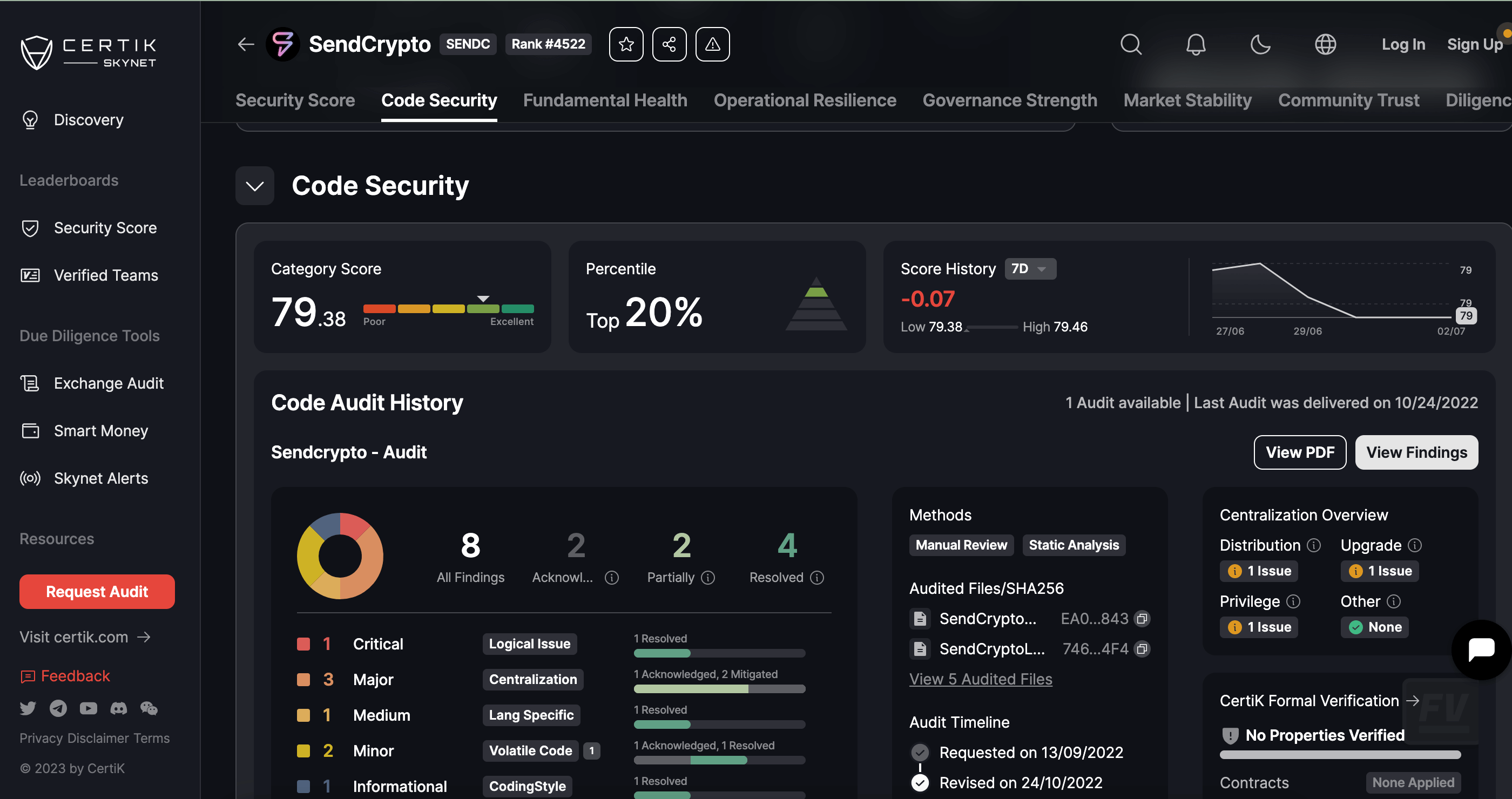
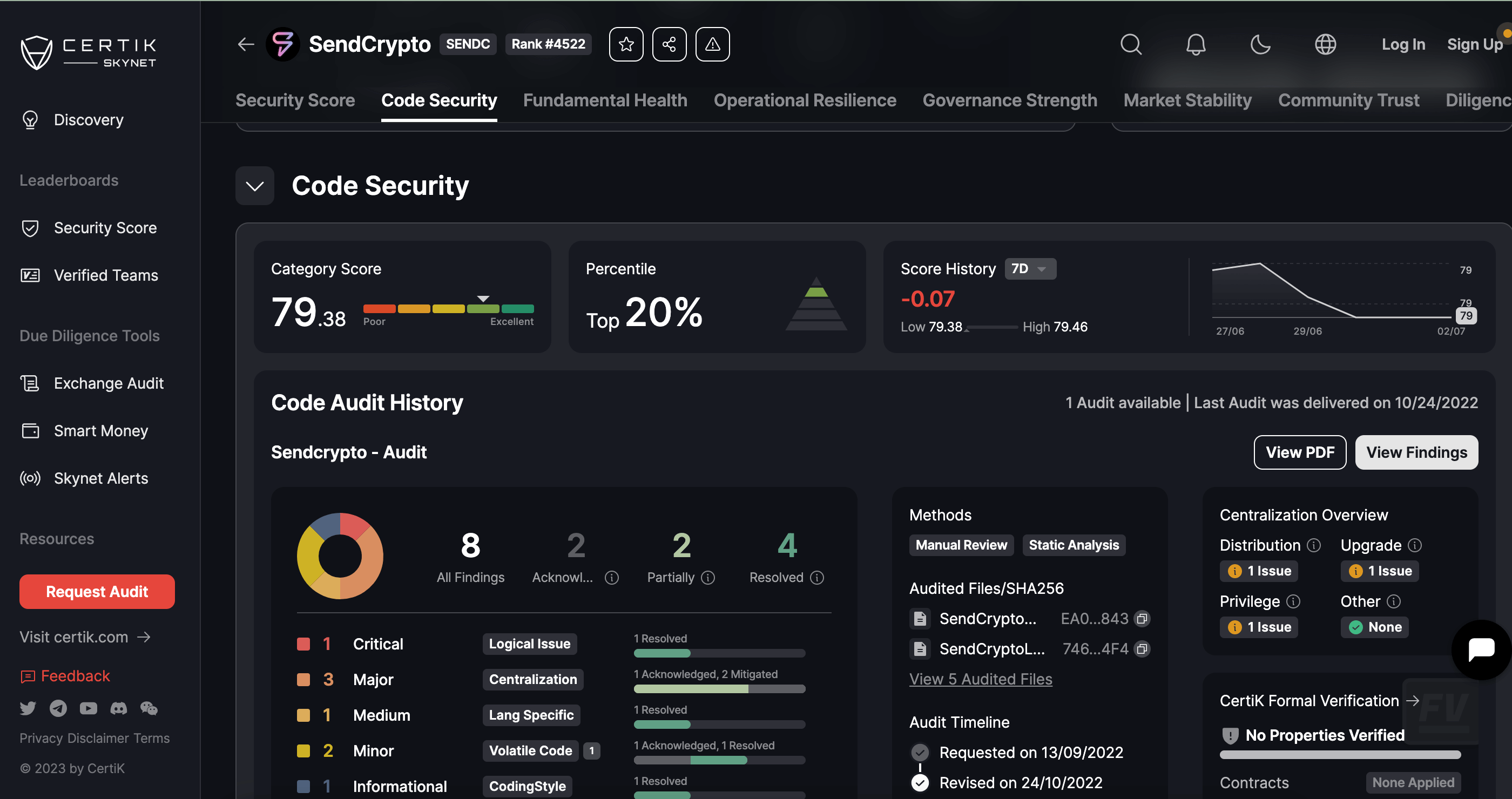
The engineering focus was not only initial delivery. After an audit dated October 24, 2022, we refined the smart contracts based on the findings and continued improving the implementation. That audit-response loop is part of the case study because it shows how we handle real Web3 delivery: ship, verify, harden, improve.
What We Delivered
- Solidity smart contracts for payment logic on Polygon
- A user-facing product for global crypto payments
- Public on-chain transaction transparency
- A blockchain choice optimized for scalability and lower operating friction
- Post-audit contract improvements following formal review
- A payment-oriented DApp architecture designed for P2P and P2B use cases
Results
- Transparent settlement layer: payment logic is executed through public smart contracts rather than hidden proprietary bookkeeping
- Practical chain economics: Polygon helps keep transactions more scalable and cost-conscious than heavier alternatives for this use case
- Stronger security posture after review: contract refinements following the 2022-10-24 audit demonstrate an improvement path rather than a one-shot launch mentality
- More usable crypto payments: the mobile application layer lowers the usability barrier between blockchain infrastructure and day-to-day payment actions
- Proof of accountable Web3 delivery: the project shows we do not stop at writing contracts; we follow through on review, refinement, and product usability
Technical Highlights
Solidity as the business logic layer
The important part is not merely that Solidity was used, but that the payment rules are explicit, public, and inspectable on-chain.
Polygon for scale and efficiency
Choosing Polygon aligned the product with lower-cost, higher-throughput execution, which is important for payment behavior that cannot tolerate excessive friction.
Audit-informed iteration
A lot of blockchain marketing talks about security in abstract terms. This project includes a concrete audit milestone and the follow-up hardening work that came from it.
Proof Artifacts
- Public site: sendcrypto.com
- Portfolio asset:
/public/assets/portfolio/sendcrypto-audit.webp - Concrete proof point: post-audit contract refinement after the 2022-10-24 review milestone documented in this case study
Transferable Value For Clients
SendCrypto is relevant if you need:
- crypto payment products
- Solidity engineering for user-facing financial workflows
- smart contracts that need post-audit improvement and operational ownership
- DApps where usability matters as much as protocol design
- payment rails that require more transparency than traditional systems provide
This case study proves that we can work on Web3 products where real money, trust, and product clarity all sit in the same delivery scope.
Work With Us
If you need secure smart-contract delivery or a usable Web3 payment flow, contact us. We build blockchain products with the same emphasis on accountability that we bring to every other stack.
Project site: SendCrypto.com