
Camera and Image Utility App Development
Native iOS and Android camera apps with live filters, image editing, and local processing, so photos and edits stay on the user's phone.
See our work:
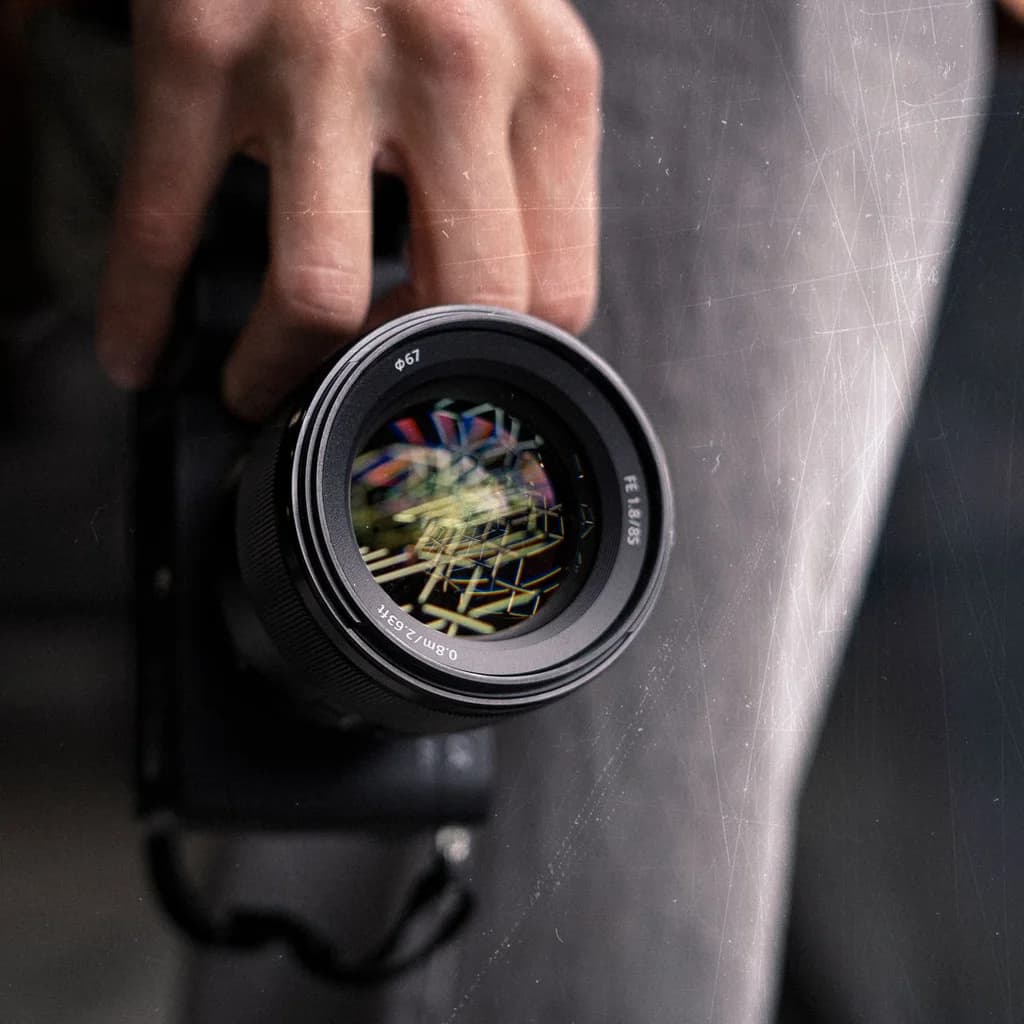
A camera utility is judged in seconds. Someone opens the app, points the phone at a subject, taps a filter, and decides whether the result looks right. A preview that stutters, a colour shift between preview and saved file, or a permission prompt at the wrong moment ends that trial early.
The second failure arrives after install. An export that drops the wrong metadata, a save in the wrong album, or a filter that renders differently on a three-year-old handset than on this year's model produces one-star reviews from people who liked the product otherwise.
Where these apps lose users
Two costs decide whether a camera app survives its first week. The first is time to first frame: when the capture session is configured after the interface appears, the user stares at a black rectangle. The second is consistency between preview and file. Preview runs at lower resolution with fast approximations, while export runs at full resolution with more accurate maths, and when the two paths drift apart the saved photo surprises the user.
Who this suits
- Camera and photo-editing apps sold as one-off purchases or subscriptions
- Creator tools where filter packs, presets, or effects are the product
- Utilities built around mirroring, scanning, annotating, or measuring images
- Products where users handle sensitive photos and expect processing to stay on the phone
- Teams whose existing app needs the capture or image pipeline rebuilt on solid ground
A server suits heavy batch processing; in a camera app, upload latency shows up in the interaction.
What we deliver
Capture, permissions, and quality
We set the permission request so the user understands why the camera is needed before the system dialog appears, and we handle denial without dead ends. On iOS the AVFoundation capture session is configured and the preview layer attached before the interface animates in. On Android we use CameraX and fall back to Camera2 for hardware that needs it.
Capture quality is decided early: preview resolution against saved-file resolution, focus and exposure locked on tap, white balance held steady, and front to rear switching that does not restart the session.
Filters, mirrors, and canvas transforms
Filter work is a chain of small stages: colour transforms, tone curves, grain, blur, and the mirror or rotation matrices. We keep that chain explicit, so a preset holds parameters and a new filter pack is cheap to add. Brightness, contrast, crop, and rotation run through the same pipeline, so a look and an adjustment combine in one pass without stacking encodes.
GPU or CPU, decided per stage
Live preview belongs on the graphics processor. Per-pixel operations written as shaders hold a steady frame rate on modest hardware, which is how Camera Mirrors applied mirror and reflection effects to live camera frames through custom OpenGL shaders. We build that class of work on Metal for iOS and Vulkan or OpenGL ES on Android.
Full-resolution export has a different budget: a single CPU pass over a twelve megapixel image taking a second or two is acceptable, and some effects are easier to write correctly there. We choose per stage, then compare the export against the preview render, because shader maths in 8-bit colour space drifts and users read that as a filter that changes after saving.
Preview performance on older devices
The oldest supported device sets the frame budget. The preview is rendered at the size of the screen, frame buffers are reused instead of allocated per frame, and camera resources are released when the app is backgrounded. Thermal throttling is treated as a normal state: on a warm device the pipeline drops preview quality before it drops a filter.
Measurements come from real hardware: GPU frame capture in Xcode on iOS, rendering profiles on Android, and the oldest supported handset as the reference.
Export, formats, and metadata
Export options belong in the specification: JPEG with a quality control, HEIF where the platform and destination support it, PNG when transparency matters, and batch export for users working through a series. Orientation and colour profile travel with the file, and we decide with you whether GPS location is retained; by default it is not on shared exports.
Saving into the photo library follows platform rules, including MediaStore and scoped storage on Android and limited library access on iOS. Where the app keeps its own library, we handle storage growth.
Where the images are processed
All processing runs on the phone. Photos, edits, and intermediate buffers stay in the app's own storage, and nothing is uploaded. The trade is real:
- No server GPU sits behind the pipeline, so the phone's memory ceiling bounds the image size the app handles in one pass.
- Sustained filter use warms the device, so the pipeline degrades instead of stuttering.
- Nothing is backed up unless the user exports it, so exporting has to be obvious.
- Analytics cannot inspect image content, which limits what you learn about which filters people use.
We take that trade when the privacy promise is part of the product. CalculatorX makes a similar promise for stored media and states plainly that hidden files are not stored online.
How an engagement runs
We start with the device matrix: which phones and operating system versions the app must support, and which is slowest. That decision shapes the camera stack, the preview resolution, and the minimum hardware the filters can assume.
A pipeline spike follows: the capture session, one filter, preview, and a full-resolution export, measured on the oldest supported device. If the frame rate or the memory ceiling cannot hold, we learn it before the interface work starts.
The build runs in two week increments with a device pass after each one. Before submission we test the behaviours reviewers and users hit: permission denial, an incoming call mid capture, low storage, and rotation with a live preview.
What it costs
Our flat rate is $39 per hour, and monthly plans for a sustained delivery queue start at $2,699. For a first release, the published mobile MVP typical order is $4,800 to $8,500 across four to six weeks, covering roughly 20 to 25 screens with a backend and store submission. A camera utility of that scope swaps some interface work for pipeline work, and the timeline holds when the filter set is defined up front.
What moves the number is specific: one platform or two, how many filters and whether users can build their own presets, RAW capture, batch export, an encrypted local library, and how far back the supported device list reaches. The pricing page sets out the hourly and monthly models side by side.
Proof
Camera Filters is a native iOS photo editor with real-time preview across vintage, black and white, and sepia looks, plus brightness, contrast, crop, and rotation controls. It shows we can build an editing loop where trying a look is instant.
Camera Mirrors applies mirror and reflection effects to live camera frames through custom OpenGL shaders, working directly with the GPU. It shows we can take a camera pipeline down to the rendering layer when frame rate is the constraint.
CalculatorX is a Swift privacy utility that hides photos, videos, and contacts behind a PIN-protected, disguised vault, with a stated on-device storage model. It shows we handle local storage and user trust alongside the image work.
Related services
- Native iOS app development for AVFoundation capture work, Metal rendering, and the Apple review path
- Native Android app development for CameraX and Camera2 pipelines across a wide device range
- Mobile app development for the full picture, including when one shared codebase is the better choice
- Mobile app bug fixing and performance when an existing app drops frames or leaks memory in the camera view
- Mobile app security audit and hardening for the storage and access side of a photo-handling app
Next step
Send the feature list, the platforms, and the oldest phone the app has to support. We will say which parts belong on the GPU, what the preview pipeline costs on that device, and what a first release covers.
Contact us with your requirements, or run the scope through the Vasilkoff.info estimator to get an initial range before you talk to anyone.